




BLEPHAROPLASTY SURGERY
 Rejuvenate your look!
It is one of the most widespread operations in plastic surgery, known for its fast and impressive result on the overall appearance of the face (the eyes are the most common focal point of a face).
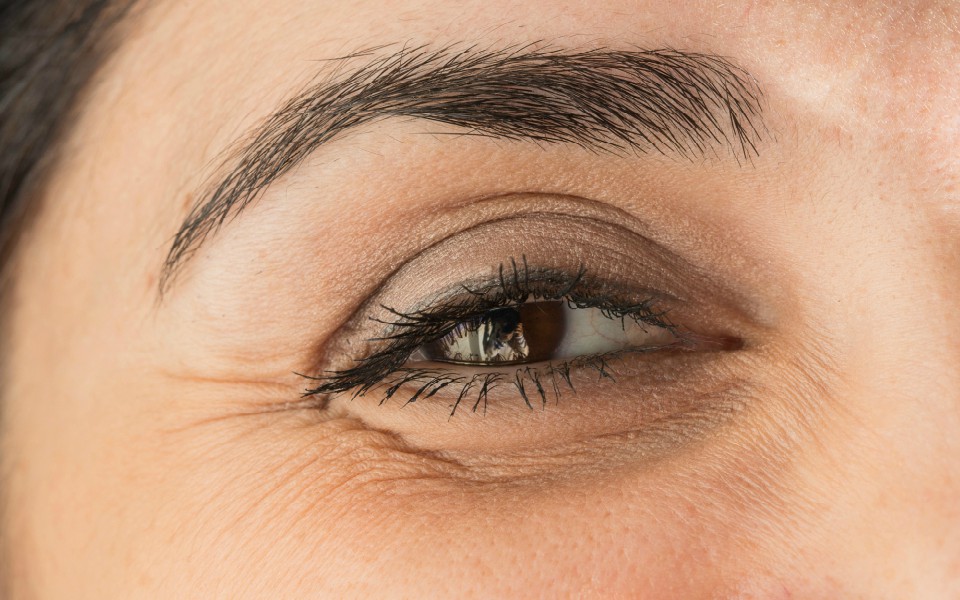
The indication for blepharoplasty is dermatochalasis, i.e. laxity of the upper and/or lower eyelid, which manifests with excess skin that can sometimes obstruct vision "like a curtain". The phenomenon is aggravated by the natural descent of the eyebrows that occurs with age.
Upper blepharoplasty is performed under local anaesthesia with the use of vasoconstrictive substances, which ensure a bloodless and painless operation. The blepharoplasty incision is made approximately 1cm above the lashes of the upper eyelid, in the natural crease of the area. Through this access, the excess skin is removed, the orbicularis muscle is preserved, excess fat that usually protrudes in the medial compartment near the root of the nose (pale fat) is removed, the levator muscle of the eyelid is tightened in case of ptosis, as well as the entire eyebrow or the lacrimal gland. A continuous intradermal suture is placed in the skin, which is removed one week later.
In general, before establishing the indication for upper blepharoplasty, we carefully identify the height of the eyebrows and any asymmetries in front of the mirror. In case of drooping eyebrows, it is preferable to lift them with various techniques and then assess the actual excess skin of the eyelid. We consider it a mistake to "fix" a drooping eyebrow close to our eyes with blepharoplasty. The operation should also be at least four months after the last brow lift treatment with botox.
Through the same incision we can lift the angle of the eyebrow as well as the angle of the outer corner of the eye (foxy eyes).
Lower blepharoplasty is performed either under local anaesthesia or under combined anaesthesia, i.e. a combination of sedation and local anaesthesia. It concerns people with laxity of the lower eyelid and pronounced wrinkling of the skin, prolapse of fat mainly in the middle and outer fat compartments, also known as "bags under the eyes", exposure of the lower part of the orbital rim (tear trough), correction of ectropion, treatment of the three wrinkles at the outer corner of the eye ("crow's feet") or even correction of the descent of the middle third of the face. The lower blepharoplasty incision can be made in the conjunctiva (transconjunctival), in which case it is not visible externally, or just below the lashes. Through this access the orbicularis muscle is tightened and the eyes take on a more youthful appearance, the excess skin that causes wrinkles is removed, as well as the protruding fat. If there is also loss of volume around the lower eyelid, this is restored with micro fat grafting.
In general, we consider that rejuvenation around the eyes is multifactorial, and that is why we must address each factor in a separate way. The newest trend is to combine all the above methods in a technique known from Dr. Kami Parsa as trifecta lift. The bags are removed without a visible incision, the lost fat around them is restored with fat grafting, the corner of the eyelid is lifted and the skin is rejuvenated with chemical peeling.
For both upper and lower blepharoplasty, the first postoperative days include mild swelling, usual for the area, which subsides on the 3rd-4th day. The aesthetic result becomes visible after the first month and is complete after the second. The operations can be performed either individually or in combination (periorbital rejuvenation) with other operations (rhytidectomy – facelift).
During the visit to the office, the available options that match the patient's wishes, the details of the operation, the type of anaesthesia proposed for the specific case, any complications and the likelihood of their occurrence and, finally, the cost of blepharoplasty will be analysed in detail.