



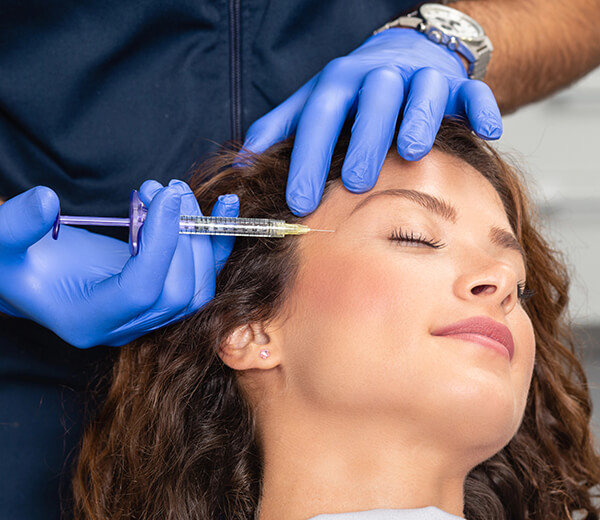
It took Dr. Joshua Van der Aa about 2 years to perfect the technique that aims to challenge the widely used “Foxy Eyes”.
In practice, we use small amounts of strategically placed hyaluronic acid (with specific properties) at points in the temple, brow, and upper eyelid in order to achieve the following goals:
- Brow lift.
- Elimination of the “tired look” in the upper eyelid.
- Improvement of the eyes’ photogenic appearance.
- Restoration of the shape of the “tail” of the upper eyelid by smoothing the fading toward the temple.
Its difference from “Foxy Eyes” is that it does not use threads for lifting, but rather relies on the anatomy of the area and the precise application of simple laws of physics. Injection depth, the choice of the appropriate material, and the use of a microcannula are of enormous importance in that area.
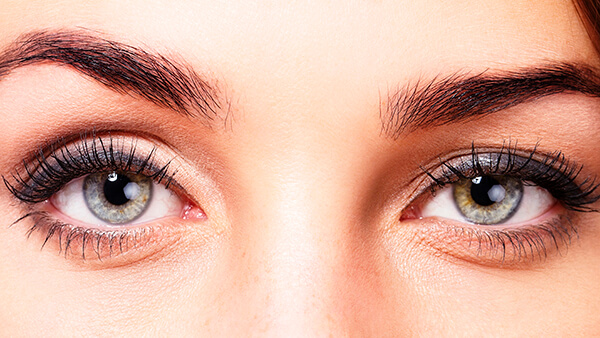
This is an extension of the technique towards the temple, forehead, and lower eyelid. We meticulously restore the tear trough area (around the bags/dark circles), while avoiding the festoon area.
In cases where the indicated amount of hyaluronic acid exceeds a certain threshold per area, the use of autologous fat (microfat grafting) is recommended,providing an excellent result which lasts for three years.
In eyes with an edematous lower eyelid or bags (wet festoons), it can be combined with injectable peptides to reduce eyelid volume, or even with Endolift™ thightening of the eyelids.
ρων.
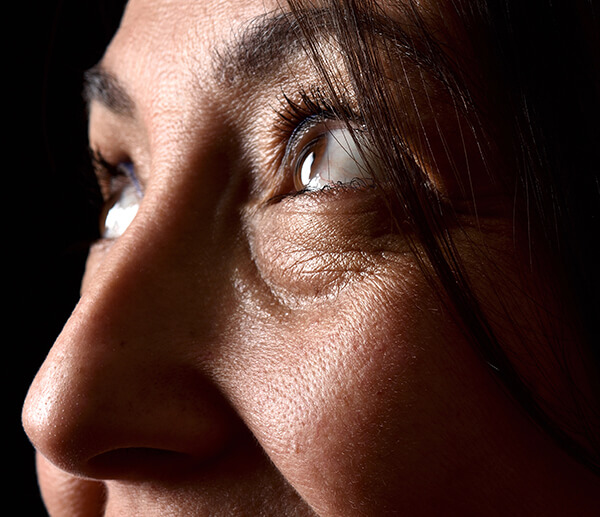
It was developed by Dr. Kami Parsa with the goal of dispelling the myth that surgically treated eyes must look “operated” and unnatural.
It addresses well-known problems of older blepharoplasty techniques—such as rounding of the eyelids and changes in the architecture of the outer corner—since it does not use a visible incision in the lower eyelid; the incision is made on the inside of the eyelid.
It is mainly indicated in older patients and in cases where the tone of the eyelid sphincter is lax.
It uses techniques such as internal canthopexy, fat grafting, fat repositioning, chemical peeling, and transconjunctival lower blepharoplasty. The result is distinguished by its natural appearance, so much so that even an experienced plastic surgeon may have difficulty identifying it.
Often, the ideal smile is not only a matter of lip volume, but also of balance in the surrounding area in relation to the overall shape of the face.
After a detailed analysis of each face individually, we recommend the techniques that will provide a natural and long-lasting result, such as:
- Endonasal Upper Lip Lift: This is usually performed under local anesthesia through a small incision hidden inside the nostrils. From there, the orbicularis oris muscle is lifted, excess skin is removed, and the distance between the nose and the mouth is reduced. The result is fuller, more natural lips, as the mucosa is everted forward, reducing the need for large volumes.
- Corner Lip Lift: Recommended when the corners of the lips are drooping. Through a small incision at the edge of the lip, the corner is lifted and symmetry is restored.
The truth is that lip volume enhancement became a major trend over the last decade, often leading to excessive and disappointing results.
Because symmetry and beauty are always in style, our approach is different.
Instead of relying on extreme volume for lifting, we prefer to achieve lifting surgically, with the final lip volume being the most natural result of combining the lift with hyaluronic acid.
Laser is being reintroduced as a tool in facial rejuvenation. Now that demand for innovative and effective solutions for tightening the face, contour, and neck is increasing, a minimally invasive, incision-free technique has arrived to address the problem. It began in Italy four years ago and very quickly earned a high level of trust among both the public and physicians worldwide.
It uses specialized 1470 nm diode laser technology, which distinguishes it from similar technologies of the past (laser lipo or smart lipo). This helps avoid fat loss in the face, leaving only collagen production and firmness as the final aesthetic result.
The procedure is simple and is performed in the clinic with minimal local anesthesia. It usually takes half an hour to one hour (if the neck is included), during which a hair-thin optical fiber is inserted under the skin and rejuvenates it from within.
The result is dramatic. The heaviness above the nasolabial folds and marionette lines disappears, the midface is unified and lifted, as are the contour, double chin, and neck. The results are particularly favorable for lower eyelid bags, both in reducing fat (with special settings) and in firming the area. In fact, it is the only minimally invasive technique that effectively addresses this complex problem.
Among its advantages is that it does not require significant recovery, since the minimal swelling is quickly absorbed. Results become visible gradually after 15 days, and collagen production is completed within 6 months. It can also be combined with other techniques such as microlift, face-neck lifting threads, and peels. On the body, it targets problematic areas such as the abdomen around the navel, the arms, the inner thighs, and the knees, where laxity is pronounced and cellulite is visible.
Endolift can also be used as an aid in smaller-incision upper-face lifting procedures (microlift, one-stitch facelift, temporal lift) to restore lower areas of the face where these techniques struggle to correct effectively. This approach has also been referred to as a ponytail facelift, because it mimics the characteristic lift that occurs in the face when the hair is tied back in a ponytail.

Myellevate™ Neck Contour
New skin-tightening technologies for the neck have given us the ability to combine them in order to avoid unnecessary incisions whenever possible. Nowadays, fat removal in this area is no longer performed with the classic method, but instead uses ultrasound-assisted technology (Vaser™ lipo), vibration assisted liposuction (Vibrasat Pro™), and plasma technology (argon plasma tight).
The method usually requires local anesthesia, and through a small opening under the chin, the excess fat is removed after first being liquefied using ultrasound technology. In this way, the usual problems of classic liposuction—such as bruising, irregularities, and skin laxity—are avoided.
This is followed by tightening through ionized argon gas in plasma form beneath the skin across the entire neck and jawline.
The final stage involves suspending the neck muscle (the platysma) with a permanent non-absorbable suture in the area behind the ears. Through the same opening, we can also correct the lateral loose areas of the lower face that bother most patients (jowls). The result is impressive and fully visible by the end of the procedure.
Recovery includes swelling for the first three days, which is reduced by wearing a special garment (corset). The tightening process is completed in six months, with results visibly apparent from the first week. In selected cases where excess neck skin is significant, it can be combined with minimal skin removal on the back surface of the ear flap. This incision does not extend into the hair and is discreet (Myellevate +™).
The technique of placing a bioabsorbable mesh in the breast has now reached the maturity of its fourth year of use. A synthetic, slowly absorbable, American-made mesh is permanently fixed in the inframammary area, at the lower pole, and supports it like an internal bra, providing a long-lasting natural result even in cases of multiple repeat breast surgeries. Its philosophy lies in supporting the soft tissues of the area, especially when their quality is not surgically acceptable.
It can be used either on its own (Galaflex breast lift) or to support an implant of substantial weight. Although it is broken down by specific enzymes in our body after two years, follow-up has shown that the result remains stable over time because it is replaced by our own collagen. In this way, in selected cases, the sometimes disfiguring vertical scar in the breast can be avoided. The nipple area is lifted separately with a periareolar mastopexy.
The technique combines excellently through the same inframammary incision with reverse abdominoplasty, a fairly common option in mummy makeover procedures after pregnancy.
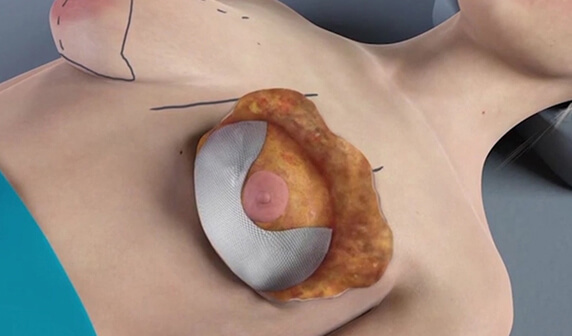
No, breasts have not yet become intelligent, although implants with microchips for product serial code identification are available on the market. The technique refers to a smart way of internally managing a moderately drooping, volume-deficient breast so that the sometimes unattractive vertical lift scar can be avoided. In these cases, a combination of all the methods available to the plastic surgeon is used to achieve the desired result, such as:
- Anatomical silicone implants and the use of an internal Galaflex
- Anatomical silicone implants and the use of an internal de-epithelialized inferior-pole flap (for cases with a heavy breasts and pseudoptosis).
- Anatomical implants with a polyurethane surface (breast augmentation).
- Supporting the entire base of the gland with sutures to the muscle, mimicking the natural ligaments (Cooper’s ligaments) that have weakened over time.
- Periareolar mastopexy with an oval design to lift the nipple by up to 2 cm, as well as reduce its size where needed.
Almost all of the above cases require complementary fat grafting for further improvement of shape, as well as skin tightening with argon plasma or body Endolift.
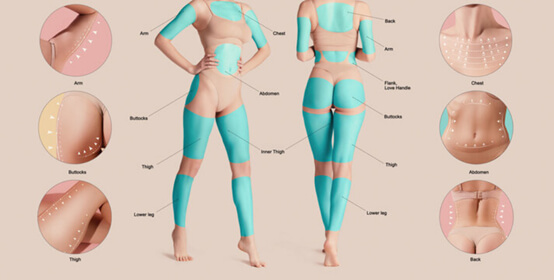

The combination of energy-based tightening liposuction for the entire body at its best!
New technologies have taken the place of classic liposuction, addressing its childhood problems: irregularities, laxity, dimpling, and so on. The use of ultrasound, with VASER lipo as its main representative, helped emulsify fat, reduced bruising and postoperative recovery time, and increased skin tightening by 30%.
Over the past three years, another method has been added: argon plasma, bringing the final tightening to an impressive 50%. The machine uses argon gas in plasma form beneath the skin, solving traditionally problematic areas such as the abdomen, arms, inner thighs, and double chin. Although the method allows significant fat removal without similarly major complications, it is artificially limited to a maximum of 4.5 liters of pure fat for the whole body. This is because we have found that beyond this psychological threshold, the number and severity of postoperative complications increase exponentially.
The result is impressive, as the silhouette is completely transformed. Depending on the amount of fat remaining, it is categorized as soft definition, medium definition, and high definition. In practical terms, the three variations differ in how visible and distinct the muscle groups of the abdomen and back are beneath the skin. The High Definition technique is aimed mainly at men with an athletic lifestyle who want the characteristic six-pack abs that fade with age.

Women’s nipples deserve perfection!
Previous techniques addressed the problem of a large areola (larger than 5 cm) by removing the excess at its border with the skin. Although every effort was made to make this incision inconspicuous, we know in advance that in some skin types this cannot be achieved.
The solution is the Perfect Nipple technique, where instead of removing the excess skin at the edge of the areola, a donut-shaped segment is removed directly along the inner border of the nipple, thereby perfectly concealing the incision.
In nipples with an inversion problem, their projection is restored at the same time through the same incision using two small permanent internal flaps. If the problem also involves nipple tilt (drooping), that is also corrected through the same incision. The impressive part is that all of the above can be achieved even under local anesthesia.
A special case is nipple reconstruction after mastectomy. In these cases, the innovative FixNip nipple implant offers a solution. It is intended for women who want a greater projection result for the neo-nipple than traditional techniques can achieve. It is placed even under local anesthesia, through a small incision, after the surgeon and the patient have first determined in the mirror the ideal placement point for the nipple.
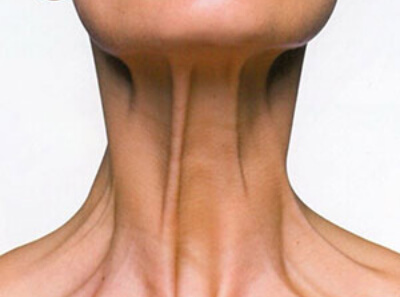
The swan neck has gained longevity!
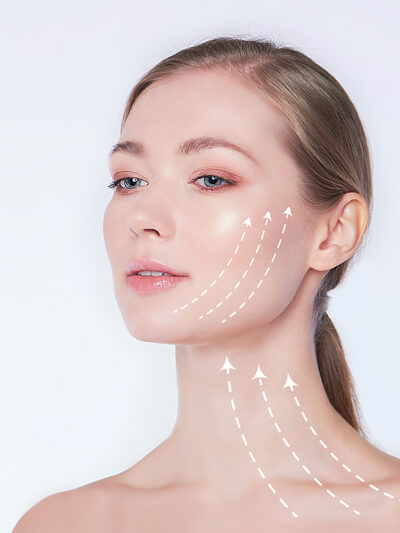
The neck is the part of the body where our age can be especially visible, which is why it requires special care and attention. The latest advances in technology, with the use of mobile phones and tablets, have made us focus even more on the problem (the well-known zoom deformity). It is not uncommon for us to sit in front of the mirror and, with our fingers, try to bring our neck back to the way it was originally. The direction of the movement is from the double chin toward the nape of the neck.
The neck lift mimics this movement exactly. Depending on how much skin remains between our fingers, the recommended incision behind the ears is designed accordingly. Thus, it can be classified as a mini neck lift or a full neck lift.
The procedure involves lifting the neck muscles depending on the problem. Techniques such as platysmal window, internal myotomies, and partial superficial removal of accessory submandibular salivary glands, among others, may be used. In the literature, these are referred to as deep plane neck lift and apply to cases where the neck is characterized by blurring of the contour, while the distinctive angle it forms with the lower jaw is almost absent. The restoration plan is individualized and includes only what is necessary for each case.
Depending on the extent of the problem, the procedure can take from two to four hours, while the type of anesthesia required ranges from local anesthesia to general anesthesia. In the area of the incisions, we use special thin absorbable sutures that do not leave a visible mark and dissolve on their own after ten days. Drains are usually not required. Recovery involves swelling for the first week, which is reduced by wearing a special garment (corset).
In special cases, when the chin lacks volume or projection, the technique can be combined with genioplasty to correct the contour.
At other times, the anatomy of the area also requires the use of a small central incision under the chin, allowing further tightening of the muscular groups in the center of the neck (corset platysmaplasty).
The result rewards our patience with its longevity and natural appearance.
Facial Rejuvenation with Fat Injection
In recent years, the use of autologous fat in the face has become widespread in plastic surgery worldwide. So much so that some have called fat the new “liquid gold.” What sets modern techniques apart from the past is the improvement of all methods of harvesting, handling, processing, and reinjecting it into the face, with the goal of achieving long-lasting results and avoiding side effects, since it is our own tissue. In our long-term experience, the results are vastly preferable to those obtained with well-known injectable materials (fillers), both in terms of durability and naturalness.
Some may be hesitant to use it, fearing undesirable outcomes that are now a thing of the past in plastic surgery. The use of special fine harvesting and transfer instruments, special kits for isolating its stem cells, and proper, experienced handling at each placement level (from microfat to nanofat) have made it the gold standard for rejuvenation and restoration of lost facial volume.
The procedure is performed under local anesthesia in the clinic and takes one to two hours, depending on the areas to be treated. It involves harvesting the fat with a small cannula, usually from the abdomen or thighs (love handles). It is then cleaned of impurities, reduced in diameter using a special technique, and reinjected into preselected areas. A key feature is the interactivity of the method, since local anesthesia allows the patient, who is in a seated position, to have an immediate opinion about the result and the amount to be injected. Old photographs are a major help and are always requested, so that the resulting face is as close as possible to them. It is not without reason that many have described it as a liquid facelift. This does not exclude its use in targeted areas that need improvement, such as the temples, around the eyes, the cheekbones, the midface, the nasolabial folds, the corners of the face, and the chin. Since it is often requested for the lips, our view is that there are more ideal solutions for that area.
When the goal is not volume restoration but rejuvenation, the fat is converted into its nanofat form. This allows us to treat even superficial skin wrinkles, perioral “smoker’s” lines, neck and décolleté wrinkles, and even the backs of the hands. Nanofat, although it does not add volume, is rich in stromal vascular fraction (SVF) mesenchymal cells capable of renewing the skin’s regenerative potential, which diminishes over time. A characteristic feature is that after this treatment, any other facial treatment produces significantly greater results.
The duration of the final result also depends on the size of the fat particles. In microfat form, the average duration is 3–4 years, while in nanofat form, skin rejuvenation lasts about 1 year.
It combines excellently with facial and neck thread-lift techniques, injectable biostimulators (Ellansé, Radiesse, polylactic acid), as well as as an adjunct to surgical facial techniques (Trifecta Lift, facelift, neck lift).
It also plays a major role in improving post-traumatic scars, atrophic acne scars, and androgenetic alopecia (hair thinning). For the latter, repeat sessions are usually required, depending on the extent and severity of the problem.
 Συνδυάζεται άριστα με τεχνικές νημάτων ανάρτησης προσώπου και λαιμού, ενέσιμους βιοδιεγέρτες (ellanse, radiesse, πολυγαλακτικό), αλλά και ως συνοδευτικό χειρουργικών τεχνικών στο πρόσωπο (trifecta lift, facelift, neck lift).
Μεγάλη είναι και η συμβολή του στη βελτίωση μετατραυματικών ουλών, ατροφικών ουλών ακμής καθώς και στην ανδρογεννητική αλωπεκία ( αραίωση τριχωτού). Συνήθως για τις τελευταίες απαιτείται επανάληψη, ανάλογη της έκτασης και της έντασης του προβλήματος.